











































DiscoverAruba.ca · Practical guide
Aruba arrival checklist: what to verify before departure

There are three different preparation tasks before an Aruba trip: confirming that you meet the official travel requirements, arranging the practical arrival, and deciding how to spend the stay. Keeping them separate makes omissions easier to spot. This checklist is independent planning guidance. It cannot determine your eligibility to enter Aruba, issue travel documents, submit an application for you or confirm a booking.
Start with the official channel
Aruba Tourism Authority links to the official ED Card portal and states that the online process is a required part of travelling to the island. Its published guidance allows completion within the seven days before travel. Follow the current instructions at the official portal, including the details applicable to your own journey. Use the official website address directly rather than assuming that the first sponsored search result is the government process. We do not accept passport details or charge to complete applications.
Check your own document situation
Travel requirements depend on your nationality, travel document, itinerary and circumstances. Check the responsible official immigration sources and your carrier rather than using another traveller’s experience as proof. Make sure names and journey details match the documents you will actually use. If travelling with children or through another country, verify any additional requirements through the relevant authorities. An ED Card qualifier does not replace every other document or guarantee a border decision. Do not send identity-document scans through this website.
Keep charges distinct from service offers
If the official process presents a charge or exemption, read its current description and terms there. This guide does not maintain a live fee amount. A commercial assistance fee, an official levy and the cost of transport are different things; identify who is charging and for what. Avoid paying a third party simply because its page looks official. Save any legitimate confirmation securely and check what your carrier or the responsible authority asks you to present.
Arrange the first connection
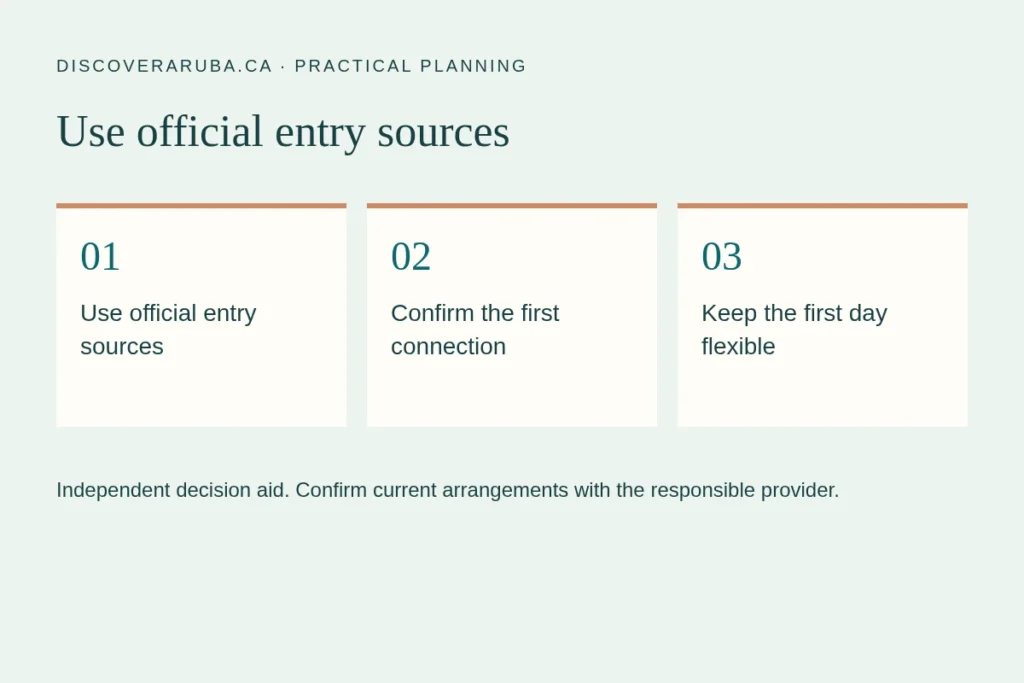
Know the actual accommodation address, check-in process and a working contact method before travelling. For arrival transport, confirm where to meet, what happens after a delay, luggage capacity and the current price with the provider. If you intend to use public transport, establish the whole route and walking connection rather than assuming that an airport-area stop serves your door. A saved hotel listing or transport idea is not a reservation. See our getting-around comparison for choosing an appropriate method.
Make a small, resilient first-day plan
Keep the first day lighter than the rest of the trip. Allow for arrival formalities, collecting luggage, finding transport, checking in and getting food. Save essential addresses and confirmations offline while keeping sensitive documents protected. Choose one simple nearby activity rather than committing to a distant tour before knowing how tired the group will be. This is an editorial suggestion, not a promised arrival duration or a packaged itinerary. Confirm actual arrangements directly with the businesses involved.
Recheck at the right time
Review official requirements before booking, again when the application window opens and shortly before departure. Check your carrier’s current instructions for both the outward and return journeys. For day-to-day exploration, start with beaches, areas and communities and the guide collection. Keep a record of which details are confirmed and which remain ideas. Good planning is not collecting the most tabs; it is knowing which information controls each decision.
Sources and current checks
Reviewed 5 November 2026. Primary-source facts are linked below; planning suggestions are our independent editorial guidance, not a booked activity or guarantee.